Something is shifting across America, and if you pay close attention, you can feel it. Couples in their 40s, 50s, and 60s – especially same-sex couples who have built careers, built chosen families, and built real lives – are asking a question they've put off asking for far too long: where can we actually belong?
For a growing and unmistakable number of them, the answer is Palm Springs, California. Not as a vacation. As a real, deliberate, next-chapter decision. And as a gay Realtor who chose this city as my own home for exactly these reasons, I want to tell you what's really driving it – and why the timing of that decision matters more than most people realize.
Is Palm Springs safe for same-sex couples? In A Nutshell
Palm Springs, California is widely considered the most LGBTQ+-affirming city in the United States, with an estimated 40–50% of its population identifying as LGBTQ+ – the highest per capita concentration in the country. The city has an all-LGBTQ+ city council (first sworn in December 2017), a dedicated LGBTQ+ healthcare provider in DAP Health (founded 1984), and formal civil rights protections that go beyond California's already strong statewide standards. For same-sex couples considering relocation, Palm Springs offers a combination of community belonging, legal protections, LGBTQ+-specific retirement infrastructure, and a real estate market with genuine entry points and investment upside.
A City Built on Almost a Century of Acceptance
Palm Springs didn't become an LGBTQ+ sanctuary because of a marketing rebrand. It got here the slow way – through decades of quiet refuge, organized community building, and genuine civic courage.
It started in Hollywood's golden era, when morals clauses in studio contracts could end a career overnight over something as fundamental as who you loved. Palm Springs offered discretion, just two hours from Los Angeles. Gay director George Cukor, Rock Hudson, and Liberace – who lived here for 25 years – weren't just visiting. They were building a culture of tolerance that would outlast all of them.
Then came the 1980s when the HIV/AIDS crisis devastated LGBTQ+ communities across the country, and Palm Springs responded with remarkable purpose. In 1984, DAP Health was founded to provide care and advocacy long before most public institutions had even acknowledged the epidemic. That response didn't just save lives – it transformed the city from a passive retreat into an active, organized, genuinely invested community.
December 2017 was the symbolic culmination of all of it: Palm Springs was sworn in as America's first all-LGBTQ+ city council, including the country's first transgender councilmember. The city now maintains an LGBTQ+ Liaison through the Office of Neighborhoods, an LGBTQ+ Outreach Committee within the police department, and has formally declared itself a sanctuary for drag performers. This is governance that looks like its residents – and for same-sex couples considering where to plant roots, that distinction is not a small thing.
People Are Voting By Taking Action
The political climate across much of the country has made the question of where to live feel more urgent for LGBTQ+ Americans than it has in years. Mounting legislative threats to marriage equality, healthcare access, and anti-discrimination protections have prompted a measurable reassessment. California has some of the strongest civil rights protections in the nation, and Palm Springs takes those protections further by building an entire civic identity around them.
The numbers behind this migration matter. SAGE – the nation's oldest organization serving older LGBTQ+ people – estimates that by 2030, roughly 7 million LGBTQ+ Americans will be 50 or older. Many in this generation spent years concealing their identities to hold jobs or maintain family relationships. As they approach retirement, their housing choices are shaped by something deep and entirely legitimate: they don't want to disappear again.
A 2022 AARP survey found that 41% of older LGBTQ+ adults are concerned about hiding their identity to avoid housing discrimination as they age. Among transgender and nonbinary respondents, that figure climbs to 58%. Researchers have documented that LGBTQ+ older adults in non-affirming environments experience compounded isolation, heightened anxiety, and measurably poorer health outcomes. These aren't abstract concerns – they're the lived reality that makes Palm Springs feel not just appealing, but necessary to so many people making this move.
And beyond the safety, there's the community itself. Palm Springs has built a genuine ecosystem of chosen family: Prime Timers of the Desert for mature gay and bisexual men, the Palm Springs Gay Men's Chorus, gay softball and pickleball leagues – the latter being one of the fastest-growing social scenes in the city (which tells you something about both the demographics and the priorities of the people moving here). For couples who relocated and found themselves surrounded by other long-term partnerships – people who had been together 20, 30, 40 years – the feeling wasn't just comfort. It was recognition.
The Real Estate Case Is Stronger Than Most People Realize
Entry Points That California Rarely Offers Anymore
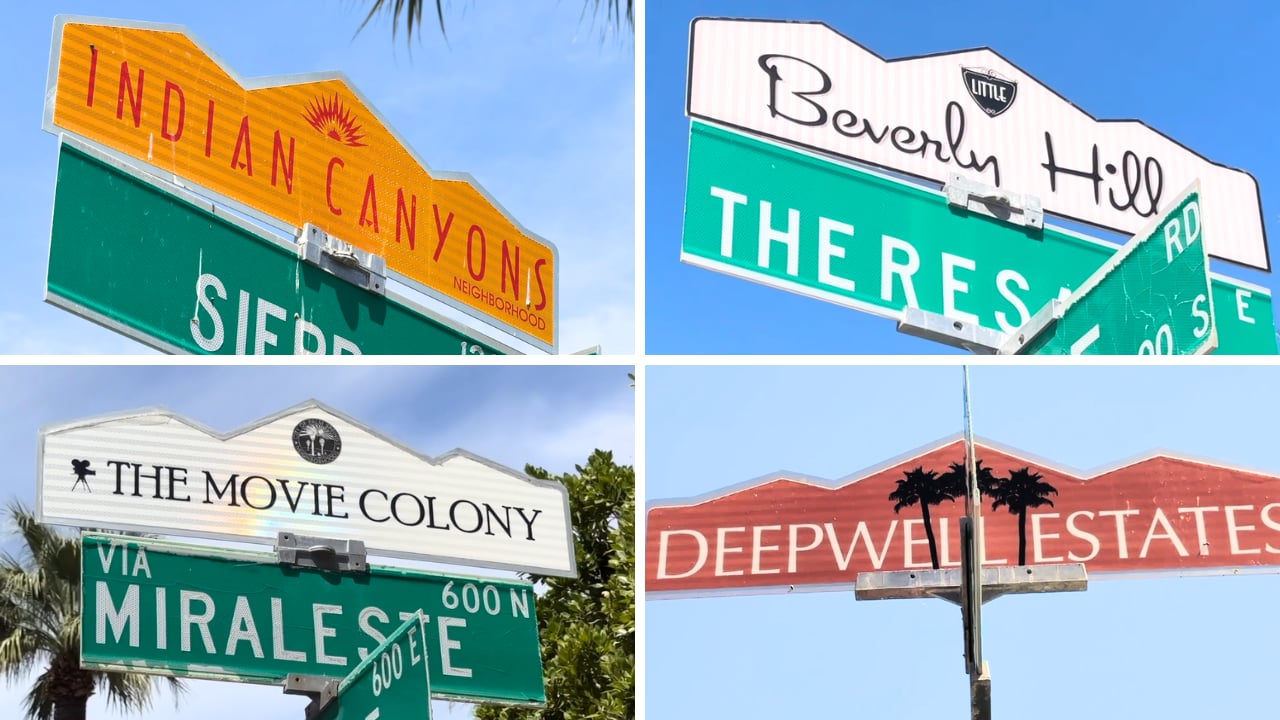
Coastal California has largely priced out the kind of buyers who might once have looked at Los Angeles or San Diego as options. Palm Springs offers something genuinely different. The median sale price here hovers around $600,000 – accessible for buyers who've built equity elsewhere and are now ready to deploy it intentionally. For those drawn to the iconic mid-century modern architecture that defines the city's visual identity (and its LGBTQ+ heritage), well-preserved examples start around $800,000, with meaningful upside in neighborhoods like Movie Colony, Deepwell, and Vista Las Palmas.
The Rental Income Strategy That Changes the Math
Here's the conversation I have with almost every serious buyer who reaches out to me: if Palm Springs is anywhere on your retirement horizon, the smartest move is usually to buy now and not wait. Rent it out in the meantime, let someone else help carry the mortgage, and let equity build quietly while you finish whatever chapter you're still writing elsewhere. Then move in when life, work, and emotional timing all line up. The home will be there waiting.
Palm Springs has a thoughtful short-term rental framework that protects neighborhoods while still allowing owners to generate meaningful income. The city requires a Vacation Rental Registration Certificate and caps permits at 20% of homes within any given neighborhood – which keeps the rental market healthy without letting it overwhelm the residential character that makes Palm Springs worth owning in. Because not every home qualifies, choosing the right location from the start is essential. It's the first conversation I have with every buyer, and it's the one that makes or breaks the strategy.
A Market With Built-In Demand
Real estate in LGBTQ+-affirming markets commands a measurable premium. A 2024 Redfin analysis found homes in areas with LGBTQ+ housing protections sell for roughly 38% more than comparable homes without those protections. Palm Springs – as one of the most affirming cities in the country – benefits from sustained demand across full-time residents, part-timers, and vacation buyers year-round. For buyers at the $800,000 and above level, that sustained demand is one of the most reliable signals of long-term value the market offers.
The Life You've Been Imagining Actually Exists Here
More than 300 days of sunshine per year, winters consistently in the 70s, world-class hiking in the Indian Canyons and San Jacinto Mountains, golf across dozens of Coachella Valley courses, and a design culture unlike anywhere else in the country. Palm Springs is the undisputed capital of mid-century modern architecture in America – and the queer legacy of that design tradition runs deep, from gay interior designer Arthur Elrod's landmark Elrod House to the annual Modernism Week every February, which draws tens of thousands of visitors with a fiercely loyal LGBTQ+ following.
The cultural calendar here is dense in the best possible way. Palm Springs Pride in November draws over 125,000 people. Cinema Diverse, the LGBTQ+ film festival, runs every September. And the dining scene has quietly become exceptional – including Alice B, the restaurant inside Living Out (the city's new luxury LGBTQ+-specific retirement community), run by James Beard award-winning chefs. The October-through-May season here is genuinely one of the most vibrant stretches of community life you'll find anywhere in California.
For buyers considering the short-term rental strategy, that peak season timing is worth noting: October through May is when demand is highest, when rental rates are strongest, and when the investment case for ownership here pays out most clearly.
Is Palm Springs the Right Move for You?
Straightforward answer: it depends on what you're looking for – and it's worth being honest about both sides. If dense urban energy and around-the-clock city activity are non-negotiables for you, Palm Springs is a small desert city and should be understood as one. July and August here are genuinely intense, and most full-time residents plan their outdoor lives around the cooler morning and evening hours during those months. Many leave for part of the summer entirely. The October-through-May season, however, is exceptional in nearly every measurable way.
Palm Springs is the right move for people who want to live in a place where being part of the LGBTQ+ community is simply normal – not an exception, not a political statement, just the fabric of daily life. It's for couples who have built financial stability and are ready to use real estate as a genuine wealth-building tool. And it's particularly for people who have been having some version of this conversation for years and keep putting it off, waiting for perfect timing. The couples I've worked with who are most satisfied with this decision are almost universally the ones who moved sooner than they thought they were ready to.
Frequently Asked Questions
Is Palm Springs actually safe for same-sex couples?
Yes – by nearly every measurable standard, Palm Springs is the most LGBTQ+-affirming city in the United States. Approximately 40–50% of the population identifies as LGBTQ+, the city government has formal LGBTQ+ liaison and outreach programs, California provides some of the strongest anti-discrimination protections in the country, and the city has declared itself a sanctuary for drag performers. Same-sex couples live openly here as a matter of daily normalcy, not exception.
What is the Palm Springs real estate market like for LGBTQ+ buyers?
Palm Springs offers genuine entry points relative to coastal California, with a median home price around $600,000 and mid-century modern homes starting at approximately $800,000 in sought-after neighborhoods. The city's short-term rental market – governed by a permit system capped at roughly 20% of homes per neighborhood – creates a meaningful income opportunity for buyers who want to own a future retirement home while offsetting carrying costs in the near term.
What percentage of Palm Springs residents are LGBTQ+?
Estimates consistently place the LGBTQ+ population in Palm Springs at approximately 40–50% – the highest per capita concentration in the United States, and likely among the highest in the world. This figure is cited by sources including National Geographic, Contiki, and local research compiled by The Palm Springs Guys.
When is the best time of year to visit Palm Springs before buying?
The October through May season is Palm Springs at its finest – mild temperatures, a packed cultural calendar, and the full social scene in swing. This window coincides with peak rental demand, making it the ideal period to both experience the lifestyle and evaluate the investment case simultaneously. If you're seriously considering a purchase, visiting during Modernism Week (February) or Palm Springs Pride (November) gives you a particularly vivid sense of what daily life here looks and feels like.
The Case for Palm Springs Is About More Than Real Estate
Buying in Palm Springs is always a smart financial decision. The market has demonstrated sustained demand, values in LGBTQ+-affirming areas carry a documented premium, and the short-term rental opportunity – structured correctly – can make ownership here genuinely self-sustaining. But the deeper case for Palm Springs isn't built on a Redfin report.
It's built on a century of intentional community. On a city that responded to crisis with compassion and built infrastructure that still serves its residents 40 years later. On a government that looks like the people it governs. On the experience of walking down a street holding your partner's hand and having that be entirely unremarkable, because in Palm Springs, it simply is. For same-sex couples who have spent any portion of their lives navigating spaces that were not built for them, that normalcy is not a small thing. It is, for many people, everything.
The couples who make this move and look back on it most favorably are the ones who stopped waiting for perfect timing and started planning with the time they had. If Palm Springs is on your horizon – even your ten-year horizon – the conversation worth having is the one you start today.
TL;DR – The Short Version
Palm Springs has the highest LGBTQ+ population concentration in the U.S. (nearly 50%), America's first all-LGBTQ+ city council, a century of built-in community infrastructure, and a real estate market where mid-century modern homes start around $800K with strong short-term rental potential. For same-sex couples who want to own where they truly belong – and build wealth while doing it – Palm Springs is the most compelling case in the country.
Where are you currently based, and is Palm Springs somewhere you've seriously put on the map? Let me know in the comments below.
If you want to learn more, check out 10 Welcoming Neighborhoods: Why Palm Springs Should Be Your Next Home and How Palm Springs Became the Safest LGBTQ+ Place in America.
What other questions do you have?
If you’re considering buying, selling, investing, or relocating to Palm Springs or the Coachella Valley – even if it’s a “someday” plan – call or text me anytime. No pressure. Just a smart strategy conversation based on your goals.
Your Palm Springs Insider,
Glen Nadeau
📱 Call or Text: 805-220-8097
📨 Email: [email protected]
📅 Zoom: Click here and let's schedule it!
💻 Website: https://www.modernlivingpalmsprings.com
🔎My Google Business Reviews ⭐️⭐️⭐️⭐️⭐️
PS- Are you a part of the LGBTQ+ community and looking to relocate to Palm Springs and the Coachella Valley? Check out our FREE “Palm Springs Enthusiasts LGBTQ+ Relocation Guide” and find out why Palm Springs is such an oasis of Pride and inclusivity – brought to you by The Palm Springs Guys and Glen Nadeau Real Estate 🏳️🌈
*We cannot guarantee any of the above statements or third-party links. Before you enter any transaction, you should read and review all contracts, leases, and information as they are unique and subject to changes. We recommend you consult with your accountant, attorney, tax advisor, and local real estate professionals prior to any real estate transactions.